
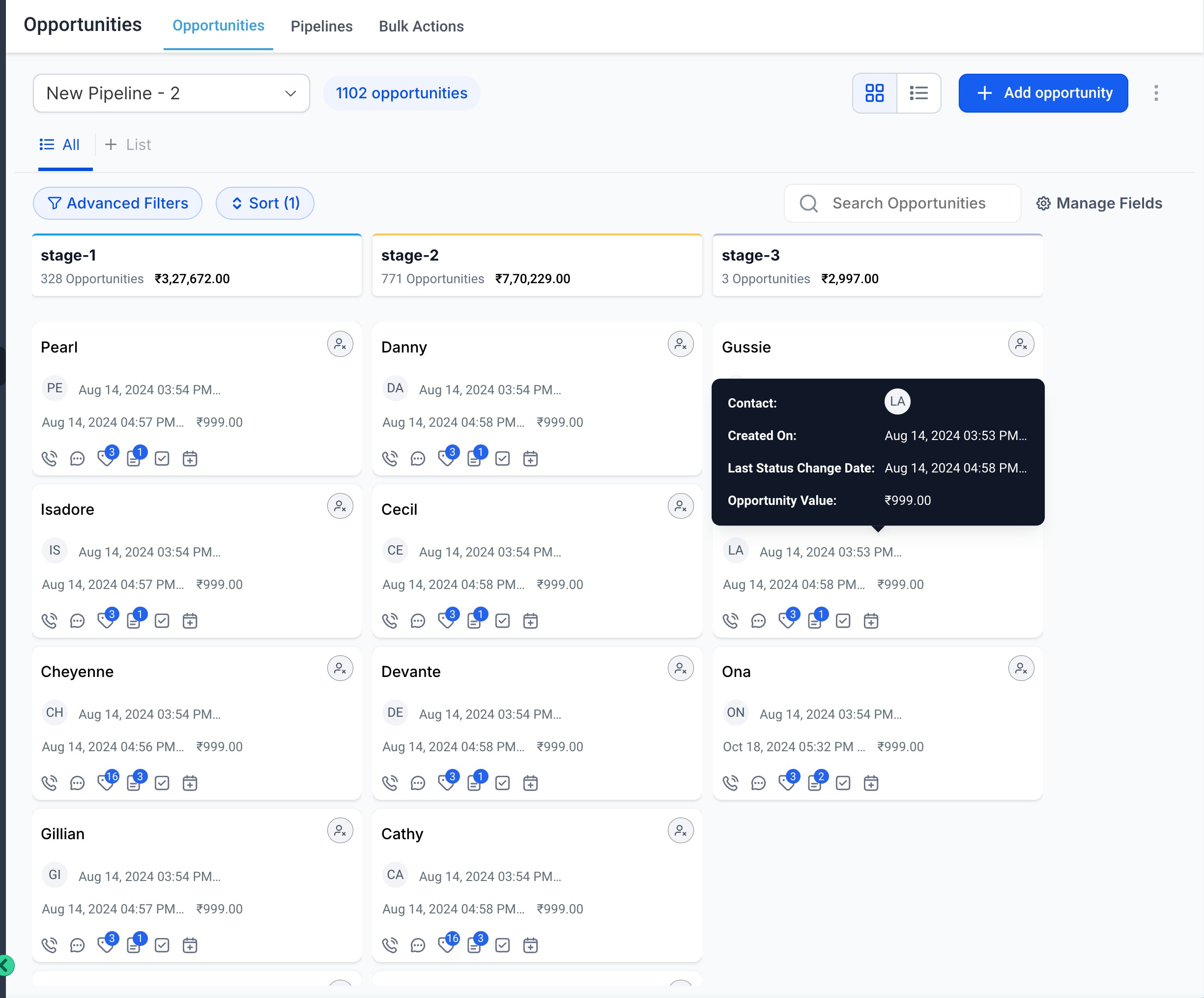

Add Brand Search and Sales Qualification to Your Marketing Dashboard
Are you tracking the right marketing KPIs to scale your business in 2026? Discover the essential metrics that truly matter for marine, luxury, and service-based businesses, moving beyond vanity to real growth indicators.
Beyond Vanity: Essential Marketing Metrics for Growth in 2026
It's July 2026, and the digital marketing landscape is buzzing with AI-driven tools, predictive analytics, and hyper-personalization. Amidst this technological evolution, the core challenge for business owners remains: how do you know if your marketing efforts are actually working? With so much data available, it's easy to get lost in a sea of vanity metrics that look good on paper but don't translate into tangible business growth. At DIGIGEN, we specialize in helping marine, luxury, and service-based businesses cut through the noise and focus on what truly matters.
In this article, we'll dive into the marketing metrics that provide genuine insights into your campaign effectiveness and directly contribute to your bottom line. Forget page views and social media likes (unless they're tied to a clear conversion path); we're talking about metrics that empower you to make informed decisions and scale your business effectively in today's competitive market.
1. Customer Acquisition Cost (CAC)
Your Customer Acquisition Cost (CAC) is perhaps one of the most fundamental metrics for any business looking to grow profitably. It tells you exactly how much it costs to acquire a new customer through your marketing and sales efforts. In 2026, with increasing ad costs and fierce competition, optimizing your CAC is non-negotiable.
Why it matters:
- Indicates the efficiency of your marketing spend.
- Highlights channels that are more or less cost-effective.
- Crucial for profitability calculations, especially when compared to Customer Lifetime Value (CLV).
Actionable takeaway for this week:
Calculate your CAC for each primary marketing channel. Sum all marketing and sales expenses (ad spend, salaries, tools, etc.) over a specific period and divide by the number of new customers acquired in that same period. Are certain channels disproportionately expensive? Focus on optimizing campaigns in those high-CAC channels. For instance, if your Facebook Ads CAC is significantly higher than your Google Ads CAC for similar customer quality, investigate your targeting, ad copy, or landing page experience for Facebook.
2. Customer Lifetime Value (CLV)
While CAC focuses on acquisition, Customer Lifetime Value (CLV) looks at the long-term profitability of your customers. CLV estimates the total revenue a customer is expected to generate throughout their relationship with your business. For luxury and service-based businesses, especially, a high CLV justifies a higher CAC.
Why it matters:
- Informs how much you can afford to spend on acquiring new customers.
- Helps identify your most valuable customer segments.
- Guides retention strategies and loyalty programs.
Actionable takeaway for this week:
Estimate your CLV based on historical data. For service businesses, this might be average contract value multiplied by average customer tenure. For marine businesses, consider repeat purchases or service subscriptions. If your CLV is low compared to your CAC, your priority immediately shifts from pure acquisition to retention and increasing average order value (AOV).
3. Marketing Qualified Leads (MQLs) to Sales Qualified Leads (SQLs) Conversion Rate
For B2B service businesses or high-ticket luxury items, the journey from initial interest to a ready-to-buy prospect is critical. This metric tracks how effectively your marketing efforts are generating leads that your sales team deems valuable and ready for direct engagement.
Why it matters:
- Measures the quality and relevance of your marketing-generated leads.
- Identifies bottlenecks in your lead nurturing process.
- Ensures sales and marketing are aligned on lead definitions.
Actionable takeaway for this week:
Review your lead scoring criteria with your sales team. Are you both on the same page regarding what constitutes an MQL and an SQL? Implement or refine a feedback loop where sales regularly provides input on lead quality from marketing. If your MQL-to-SQL rate is low, your marketing might be attracting the wrong audience, or your nurturing content isn't preparing them adequately for a sales conversation.
4. Return on Ad Spend (ROAS)
For businesses heavily reliant on paid advertising – common in the marine and luxury sectors – Return on Ad Spend (ROAS) is your North Star. It directly measures the revenue generated for every dollar spent on advertising.
Why it matters:
- Provides an immediate indication of paid campaign profitability.
- Allows for direct comparison of different ad platforms and campaigns.
- Essential for budget allocation decisions.
Actionable takeaway for this week:
Open your ad platforms (Google Ads, Meta Ads, etc.) and filter your campaigns by ROAS for the past 30-90 days. Pause or significantly reduce budget on campaigns with unprofitably low ROAS. Double down on campaigns with high ROAS. Consider A/B testing new ad creatives or landing pages for underperforming campaigns before completely cutting them.
5. Website Conversion Rate
Your website is often the digital storefront, brochure, and sales agent all rolled into one. The website conversion rate measures the percentage of visitors who complete a desired action, whether it's filling out a contact form, requesting a quote, downloading a brochure, or making a purchase.
Why it matters:
- Directly impacts lead generation and sales performance.
- Highlights user experience (UX) and content effectiveness issues.
- A small increase can lead to significant revenue growth without increasing traffic.
Actionable takeaway for this week:
Identify one key conversion goal on your website (e.g., 'Request a Demo' form completion, 'Book a Charter' click). Use a tool like Google Analytics 4 to track its current conversion rate. Then, implement one small A/B test on the corresponding page – perhaps a clearer call-to-action button, a simplified form, or revised headline copy. Even minor tweaks can yield impressive results.
6. Brand Search Volume & Mentions
In 2026, brand reputation and direct search intent are more crucial than ever, especially for luxury and service industries where trust and word-of-mouth are paramount. This metric tracks how many people are actively searching for your brand name or talking about your brand online.
Why it matters:
- Indicates brand awareness and recall.
- Shows the effectiveness of offline marketing, PR, and content marketing.
- Direct brand searches often convert at a much higher rate.
Actionable takeaway for this week:
Use Google Search Console to track your brand's organic search impressions and clicks. Set up Google Alerts for your brand name and key personnel. Actively monitor social media for mentions using tools like Brandwatch or even simply by searching platforms. A growth in these metrics indicates successful brand-building efforts that often precede direct conversions. If you see a dip, it's time to re-evaluate your brand awareness campaigns and PR strategy.
The DIGIGEN Difference: Integrating AI for Smarter Metrics Analysis
At DIGIGEN, we don't just help you track these metrics; we help you understand the 'why' behind them and leverage AI and advanced analytics to predict future performance. By integrating cutting-edge tools, we can identify patterns, forecast trends, and personalize strategies that are simply not possible with manual analysis.
For example, AI can analyze historical data to predict which customer segments are most likely to churn (impacting CLV), or which ad creatives will yield the highest ROAS, allowing for proactive adjustments. It can also help optimize your website's conversion path by identifying user friction points that human eyes might miss.
Ready to Transform Your Marketing Metrics into Tangible Growth?
Tracking these essential metrics is the first step towards data-driven marketing. But turning that data into accelerated growth requires expertise, foresight, and a deep understanding of your unique market. If you're a marine, luxury, or service-based business owner feeling overwhelmed by data or unsure which levers to pull, it's time to partner with professionals.
DIGIGEN is here to help you not only measure what matters but also implement the strategies that will maximize your marketing ROI in 2026 and beyond. Stop guessing and start growing with precision. Let's build a metrics-driven growth strategy that delivers real, measurable results for your business.
Relevant next steps
Connect lead capture, follow-up and scheduling with lead follow-up automation.
Explore DIGIGEN digital marketing services that fit your customer acquisition goals.
Give visitors a clear next step with the Smart Website Intake System.