How Price Anchors, Free Offers and Social Proof Shape Decisions
Unlock the secrets of human decision-making to craft irresistible pricing and offers. Discover actionable strategies that drive conversions and boost your bottom line, specifically tailored for today's competitive market.
The Unseen Force: How Psychology Drives Pricing Decisions
In the dynamic market of July 2026, where consumers are savvier than ever and competition is fierce, understanding the psychology behind how people perceive value and make purchasing decisions is no longer a luxury—it's a necessity. It’s not just about setting a price; it’s about framing that price and your offer in a way that resonates deeply with your target audience’s innate cognitive biases and emotional triggers. At DIGIGEN, we see firsthand how mastery of these psychological principles transforms marketing efforts from adequate to exceptional, particularly for marine, luxury, and service-based businesses where perceived value is paramount.
Many business owners focus solely on cost-plus or competitor-based pricing. While these are starting points, they miss the vast potential of influencing perception. Your pricing strategy is a powerful communication tool, telling a story about your brand’s quality, exclusivity, and value proposition. Let's dive into the core psychological principles that you can leverage to optimize your pricing and offers for maximum conversion.
Anchoring: The Power of the First Impression
Anchoring is one of the most powerful cognitive biases in pricing. It posits that people rely heavily on the first piece of information offered (the 'anchor') when making decisions. Subsequent judgments are then influenced by this initial anchor.
How to Implement Anchoring This Week:
Present Higher-Tier Options First: Whenever you display pricing, lead with your most expensive option before showing the mid-range or budget choices. Even if customers don't choose the high-end, the perception of value for your other offers increases significantly.
Offer a Premium Service as an Anchor: For service-based businesses, introduce a ‘Platinum Package’ with extensive features at a higher price point. Then, your ‘Gold’ or ‘Silver’ packages will seem more reasonably priced and attractive, even if they were originally considered expensive.
Show the 'Original Price': If you're offering a discount, always display the original, higher price prominently next to the discounted price. This anchors the perceived value at the higher amount, making the current offer seem like a significant saving. For example, a luxury yacht service might show a 'Regular Price: $10,000' slashed to an 'Exclusive Summer Charter: $7,500'.
The Decoy Effect: Guiding Choices Subtly
The Decoy Effect (or asymmetric dominance) occurs when consumers tend to have a specific change in preference between two options when a third option is presented that is asymmetrically dominated. In simpler terms, adding a 'decoy' option can make one of the other options seem much more appealing.
Applying the Decoy Effect to Your Offers:
Create a 'Just Missed' Option: Have two main offerings – say, 'Basic' and 'Premium'. Introduce a 'Standard' option that is only slightly better than 'Basic' but significantly more expensive, making 'Premium' look like a far better value for a relatively small price increase. This is particularly effective for digital subscriptions or recurring service plans.
Bundle Strategically: For marine businesses selling accessories or service packages, offer three bundles: a small one, a large one, and a medium one that is only slightly less expensive than the large one but offers significantly fewer benefits. The large bundle becomes the clear winner.
The Power of "Free" and Zero-Price Effect
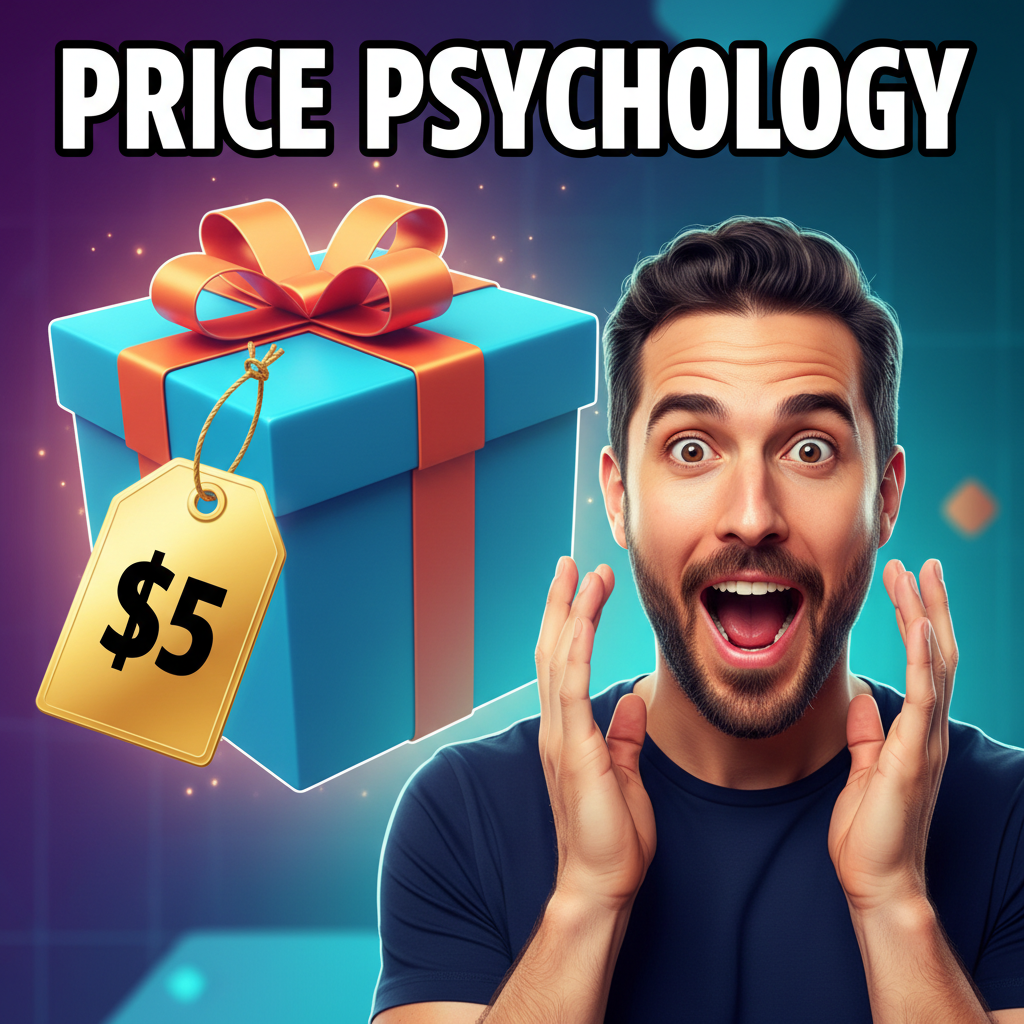
The word 'free' holds an almost magical allure. It eliminates the perceived risk of a purchase and can drastically increase conversions, even when the 'free' item is not objectively high in value. The Zero-Price Effect suggests that the utility of 'free' is much higher than any small cost.
Leveraging "Free" Effectively:
Offer a Valuable Freebie with Purchase: Instead of a straight discount, offer a free add-on or service for a limited time. For a luxury resort, this could be a 'free' spa treatment with a 3-night stay. For a service business, it might be a 'free' initial consultation or a detailed audit with the commitment to a larger project.
"Buy One Get One Free" (BOGO): This classic offer works because the 'free' item is prominently featured. It doubles the perceived value without doubling the cost for the consumer.
Free Trials Done Right: For subscription services, a truly 'free' trial (no credit card required upfront) removes all barriers to entry, allowing the product's value to speak for itself. Convert users after they've experienced the benefits.
Scarcity and Urgency: Driving Immediate Action
Humans are wired to value things more when they are scarce or when there's a limited time to acquire them. This creates a fear of missing out (FOMO) that compels immediate action, crucial for scaling marketing efforts in 2026.
Implementing Scarcity and Urgency Today:
Limited-Time Offers: Clearly state an end date or a countdown timer for special pricing or bundled services. 'This exclusive charter package ends July 31st!'
Limited Stock/Availability: For luxury goods or bespoke services, highlight the limited number of items or slots available. 'Only 3 bespoke design slots left for Q3!'
Event-Based Exclusivity: Tie offers to specific events or seasons. 'Our Monaco Grand Prix VIP Experience – bookings close next week!'
A Quick Win This Week: Add a simple scarcity trigger to one of your existing offers. For example, 'Limited to the first 20 clients' or 'Offer expires this Friday'.
Framing: Shaping Perception with Words
The way you phrase your prices and offers can drastically alter how they are perceived. This is known as framing.
Strategic Framing Techniques:
Emphasize Daily/Monthly Cost: Instead of showcasing a high annual fee, break it down. '$365 per year' can sound expensive, but '$1 a day' sounds incredibly affordable. This works wonders for subscription services or ongoing maintenance plans.
Focus on Benefits, Not Just Features: Frame your price in terms of the transformation or solution it provides, rather than just the cost of features. 'Invest in peak performance and reliability for your vessel' instead of 'Marine engine overhaul: $X,XXX'.
Loss Aversion: Humans are more motivated by avoiding a loss than by gaining an equivalent amount. Frame your offer to highlight what they might miss out on. 'Don't miss this opportunity to save 20%' rather than 'Save 20% today'.
The Odd-Even Pricing Effect: The Magic of .99
The idea that prices ending in 9 (e.g., $9.99) are perceived as significantly cheaper than round numbers ($10.00) is a well-established cognitive bias, known as the left-digit effect. Our brains process the leftmost digit first, anchoring our perception of value before we fully register the digits that follow.
Where to Use Odd Pricing:
For Value-Oriented Products/Services: If your brand aims for accessibility or a good 'deal,' odd pricing can enhance this perception. This is less common for high-end luxury, where round numbers often convey exclusivity and premium quality.
Bundled Offers: Use odd pricing for components of a bundle, even if the total is a round number, to subtly reinforce value.
Social Proof: Validation Through Others
People are inherently influenced by the actions and opinions of others. When we see others embracing an offer, we're more likely to trust it and convert ourselves.
Harnessing Social Proof for Conversions:
Testimonials and Reviews: prominently display positive customer reviews next to your pricing. For luxury services, case studies with identifiable clients (with permission) are golden.
'X Customers Bought This': Show how many other people have purchased a specific service or product. 'Join over 5,000 satisfied yacht owners!'
Expert Endorsements: If you have industry leaders or known figures endorsing your product or service, feature their quotes.
Ready to Optimize Your Offers?
Implementing these psychological pricing strategies isn't about manipulation; it's about understanding how your customers think and presenting your value in the most compelling way possible. In the competitive landscape of 2026, a well-crafted offer can be the difference between a fleeting lead and a loyal customer.
Are you confident your current pricing and offers are maximizing your conversion potential? Many businesses leave significant revenue on the table by overlooking these nuances. At DIGIGEN, we specialize in dissecting market trends, understanding consumer psychology, and crafting data-driven strategies that scale your marine, luxury, or service-based business. Let's work together to transform your pricing psychology into a powerful growth engine. Contact us today for a consultation.
Relevant next steps
Connect lead capture, follow-up and scheduling with lead follow-up automation.
Explore DIGIGEN digital marketing services that fit your customer acquisition goals.